Introduction
Modern organizations generate and store thousands of documents across Google Drive, including meeting notes, project documentation, invoices, reports, presentations, spreadsheets, policies, and contracts. While cloud storage makes document management easier, locating the right document and extracting meaningful information often requires significant manual effort.
Employees typically spend valuable time navigating multiple folders, opening files, and reading lengthy documents before finding the information they need. As the number of documents grows, this process becomes increasingly inefficient and impacts productivity.
Recent advancements in Artificial Intelligence (AI) and Large Language Models (LLMs) have transformed how organizations interact with their documents. Instead of manually searching through files, users can ask questions in natural language and receive accurate answers or summaries within seconds.
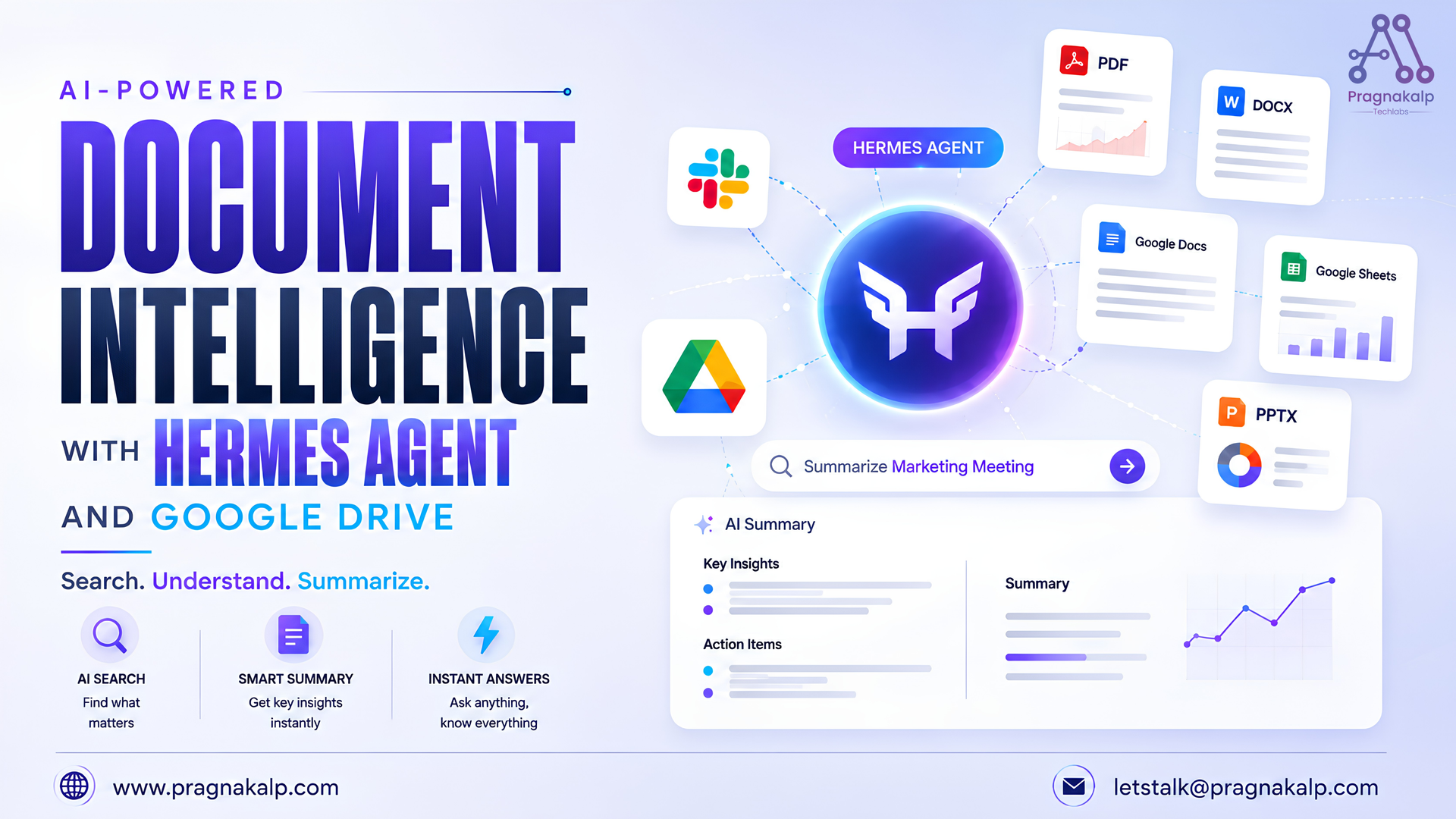
In this blog, we demonstrate how Hermes Agent, Slack, Google Drive, and an LLM can be integrated to build an AI-powered Document Intelligence workflow. The solution automatically searches Google Drive, locates the relevant document, extracts its content, generates an intelligent summary, and delivers the response directly in Slack.
System Architecture and Workflow
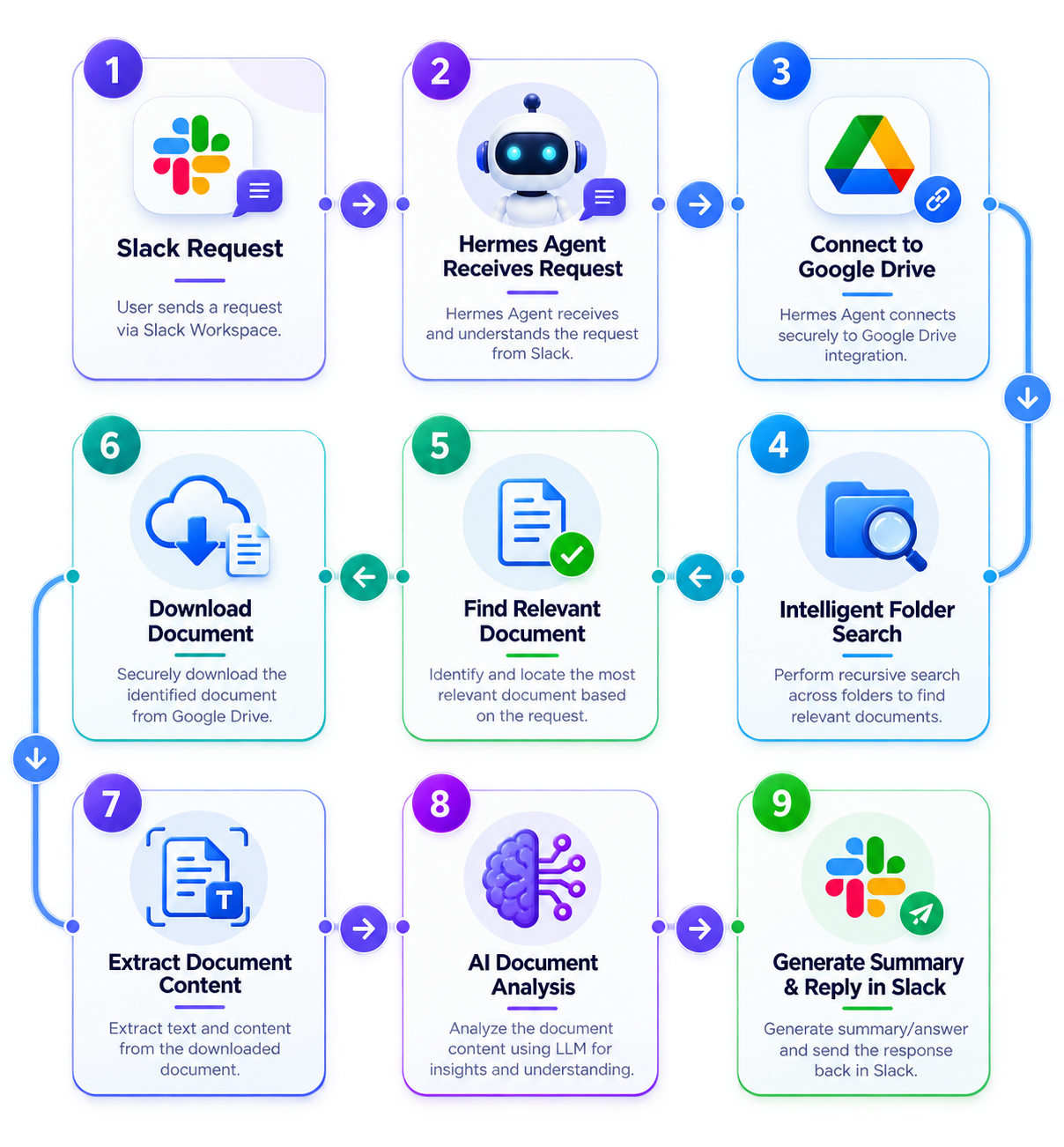
Our AI Document Intelligence solution automates the complete document retrieval and summarization process. Instead of manually searching Google Drive, users simply ask a question in Slack. Hermes intelligently locates the requested document, processes its contents, generates an AI-powered summary, and responds instantly.
Step-by-Step Workflow
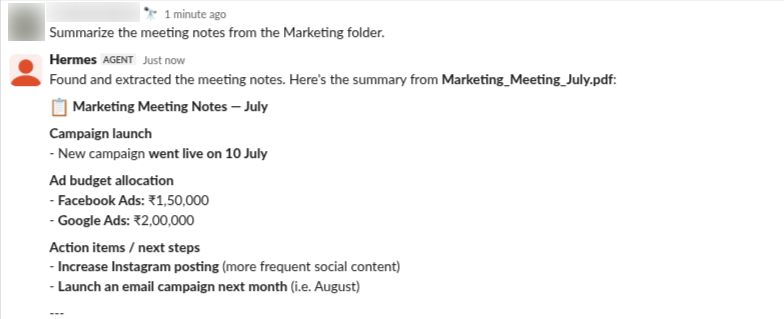
Step 1 – User Sends a Request in Slack
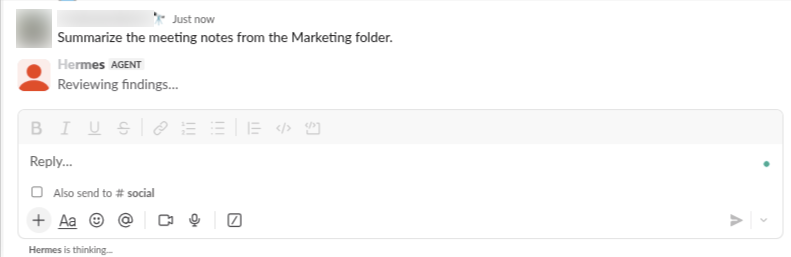
The workflow begins when a user asks a question using natural language.
Example:
Summarize the meeting notes from the Marketing folder.
The user doesn’t need to know where the document is stored.
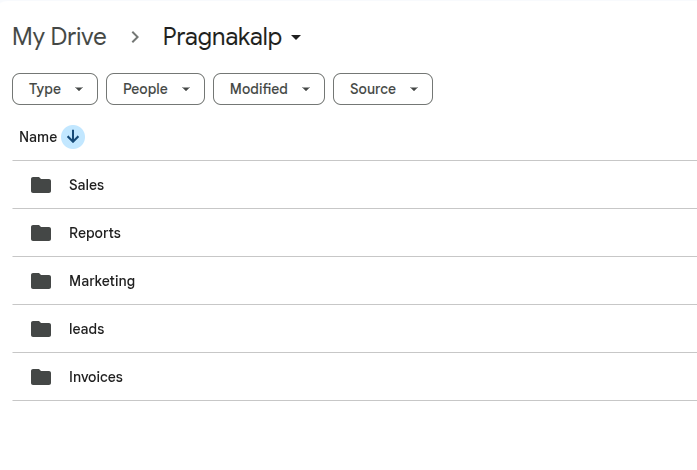
Step 2 – Google Drive Search
Hermes connects to Google Drive using the configured Google Workspace integration.
Instead of searching a single folder, the system recursively searches the appropriate folder and all nested folders until the requested document is found.
This approach allows the workflow to scale even as new folders and documents are added.
Step 3 – Document Discovery
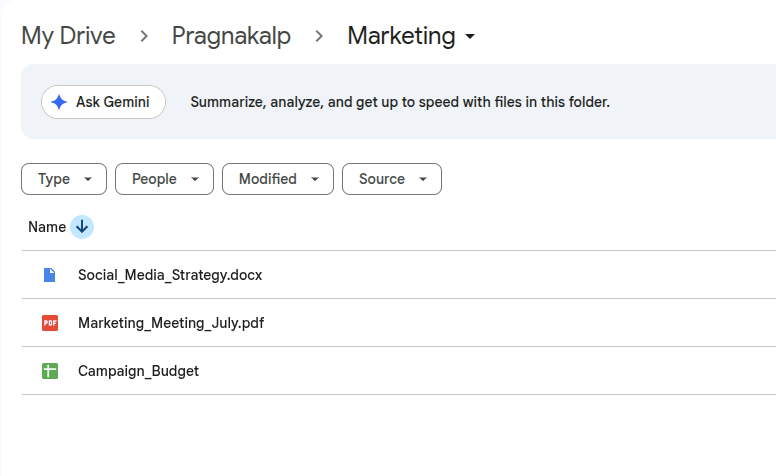
After identifying the user’s intent, Hermes locates the most relevant document.
The workflow supports multiple document formats including:
- Microsoft Word (.docx)
- Excel (.xlsx)
- Google Docs
- Google Sheets
- Images (OCR)
Hermes automatically detects the document type before processing.
Step 4 – Document Processing
Once the document is located, Hermes downloads the file and extracts its content.
Depending on the document format, the appropriate parser or extraction method is used to retrieve readable text while preserving important information.
Step 5 – AI Analysis
The extracted document content is sent to the configured Large Language Model (LLM).
The AI analyzes the content and generates:
- Document Summary
- Key Insights
- Important Action Items
- Answers to User Questions
Instead of reading an entire document, users receive only the information they requested.
Step 6 – Intelligent Response
Hermes formats the AI-generated response and posts it directly in Slack.
Example:
Marketing Meeting Summary
- Campaign launched on 10 July
- Facebook Ads budget: ₹1,50,000
- Google Ads budget: ₹2,00,000
- Increase Instagram posting frequency
- Launch email campaign next month
The entire process completes automatically without requiring users to open Google Drive.
AI Document Intelligence
Artificial Intelligence is the core of this workflow.
Rather than simply retrieving files, the AI understands document content and provides meaningful responses.
It enables users to:
- Summarize lengthy documents
- Answer questions about document content
- Extract important information
- Compare multiple documents
- Retrieve specific details from reports
- Understand meeting notes instantly
The workflow supports natural language interaction, allowing users to communicate with documents as if they were speaking to a colleague.
Business Benefits
Our solution provides several business advantages:
- Faster document retrieval
- Reduced manual searching
- AI-powered document summarization
- Support for multiple document formats
- Natural language document interaction
- Improved team productivity
- Centralized knowledge access
- Scalable document intelligence workflow
Employees spend less time searching for information and more time making decisions.
Conclusion
Our AI-powered Document Intelligence solution demonstrates how Hermes Agent, Google Drive, Slack, and Large Language Models can transform traditional document management into an intelligent, conversational experience.
Instead of manually searching folders and reading lengthy documents, users simply ask questions in Slack and receive accurate, AI-generated summaries or answers within seconds.
By combining AI with cloud-based document storage, organizations can improve productivity, simplify knowledge retrieval, and provide employees with faster access to critical business information. This workflow showcases how modern AI can make enterprise document management more efficient, scalable, and user-friendly.